Creator Record
Metadata
Name |
Sharpe, Alvin H. |
Notes |
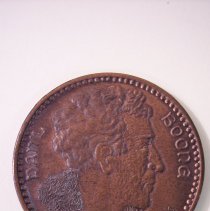
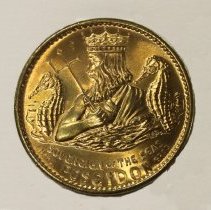
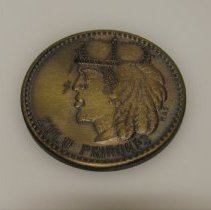
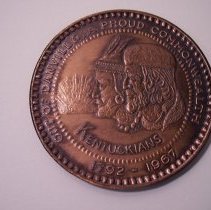
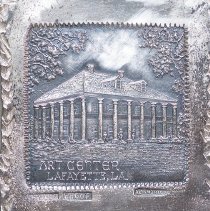
Henry Alvin Sharpe was born in 1910 in Corbin, Kentucky. He left school after the seventh grade, and in 1931 he moved to New Orleans, where he worked on the docks, and later as a deck hand. Always of an artistic bent, he took on a commission from the New Orleans Board of Trade in 1932 to paint eight ceiling panels. He glued canvas to the domes, then painted the images while laying prone on scaffold; the project took him 3 months to complete. With the onset of WWII, Sharpe joined the Merchant Marines, and quickly rose the ranks to become first mate on the U.S.S. Algiers. He made full captain before leaving the service after the war. He then travelled to Paris, thinking that he would pursue a Continental arts education. However, after a short time, he decided against the idea and returned to New Orleans. He was able to make a living by engaging in a number of artistic practices: painting, printmaking, intaglio, and silver-smithing. It was in 1959 that he rose to local fame when captain Darwin Fenner of the Rex Organization (one of the original Mardi Gras krewes) announced that he was looking for a new throw for the Mardi Gras floats. Sharpe, as an advanced metal worker, created aluminum coins, which he called doubloons (after the Spanish doblón, meaning "double"). Worried that people might be injured by the metal coins, Fenner originally was against the idea; legend has it that Sharpe walked into Fenner's office shorthly thereafter and threw a handful of the coins at Fenner's head to no harmful effect, and in 1960 the doubloon became part of Mardi Gras tradition and history. In addition to his visual arts practice, Sharpe was also a writer and poet. In 1979, a collection of his work was published entitled "Collective Meditations." Sharpe passed away in 1982. |
Nationality |
American |
Occupation |
Metalworking and painting |