Creator Record
Metadata
Name |
Moreland, William |
Notes |
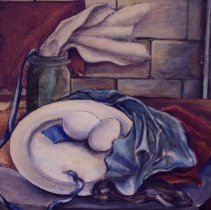
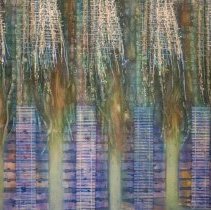
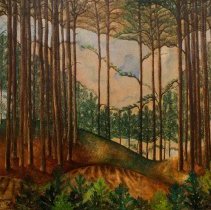
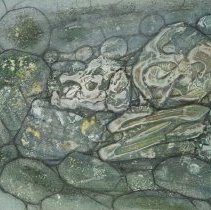
William Lee Moreland was born August 25, 1927 in New Orleans, Louisiana. The family moved to Baton Rouge soon after his birth. As a teen, Moreland attended Catholic High School. It was during these impressionable years Moreland met a Dutch Benedictine monk who would be his earliest and most important artistic influence. Dom Gregory de Wit was painting a mural for a new parish church and noticed Moreland's constant observation. de Wit mentored the young Moreland teaching him basic painting techniques. Moreland produced his own series of religious paintings. After high school, Moreland enrolled in the Fine Arts program at Louisiana State University studying under prominent Louisana artists Caroline Durieux and Conrad Albrizio. Armed with confidence, he wanted to become a "priest painter." He was commissioned to paint religious works for churches and chapels in New Orleans; Mobile, Alabama; and Pasadena, Texas. Before entering the art program, Moreland's subject matter was largely figurative and religious. Art school presented Moreland with new challenges and ideas, such as painting from observation. It was during a trip through the pine forests of Central Louisiana that Moreland was struck by inspiration. The Louisiana landscape would be his subject matter. He completed Louisiana Pines in 1947. Moreland entered the watershed painting in a state competition and won a prize. He graduated from Louisiana State University with a BA in 1948 and an MFA in 1950. In 1955, he accepted a position at University of Southwestern Louisiana (now University of Louisiana at Lafayette), and was an influential professor and administrator, chairing the Fine Arts Department and overseeing the department's move into Fletcher Hall. He initiated a regular exhibition schedule in the school's gallery bringing in such notable artists as Ida Kohlmeyer and George Rickey. Moreland's works are inspired by both the natural landscape of Louisiana, as well as religious and symbolic subject matter. His works often take the form of organic abstraction enclosed in a tabernacle-like frame sometimes in triptych form. These contrasting styles make reference to Moreland's Catholic upbringing as well as his experience of traveling through the Atchafalaya Basin. Moreland's abstract works were the subject of the Ogden Museum of Southern Art's opening exhibition in 2003, and again in 2008 with the exhibition: Southern Masters: William Moreland. In 2004, the Hilliard Art Museum hosted a fifty-year retrospective titled William Moreland Between Psyche and Sight. Moreland passed away in December 2014 at his home in New Orleans. |
Nationality |
American |
Occupation |
Art educator and painter |